Chargify app
Smart charging with ease!
Chargify is a smart mobile platform designed to simplify life for electric vehicle owners by providing quick, reliable access to nearby charging stations. With a focus on user-friendly design, dependable functionality, and a connected driving experience, Chargify ensures that staying powered on the road is always simple, secure, and stress-free.
Project type
B2C, SaaS
Industries
Autotech Mobility
Duration
Nov 2024 – Jan 2025
My role
As the sole Product Designer, I led the full design cycle — from early research and journey mapping to flows, UI, and testing — delivering a friendly experience that feels simple, fast, and reliable for EV drivers.
Skills
UI/UX Design, Research, Visual design, Branding
Problem
EV ownership is growing fast, but the charging experience still feels confusing and slow: availability isn’t clear, prices are hard to understand, and there are too many steps just to start a session. This creates frustration and drop‑off at the curb.
Drivers need a simpler path: find a compatible charger quickly, see straight‑forward pricing, and start charging in a couple of taps. Clear, honest information and streamlined flows make the process feel predictable and calm.
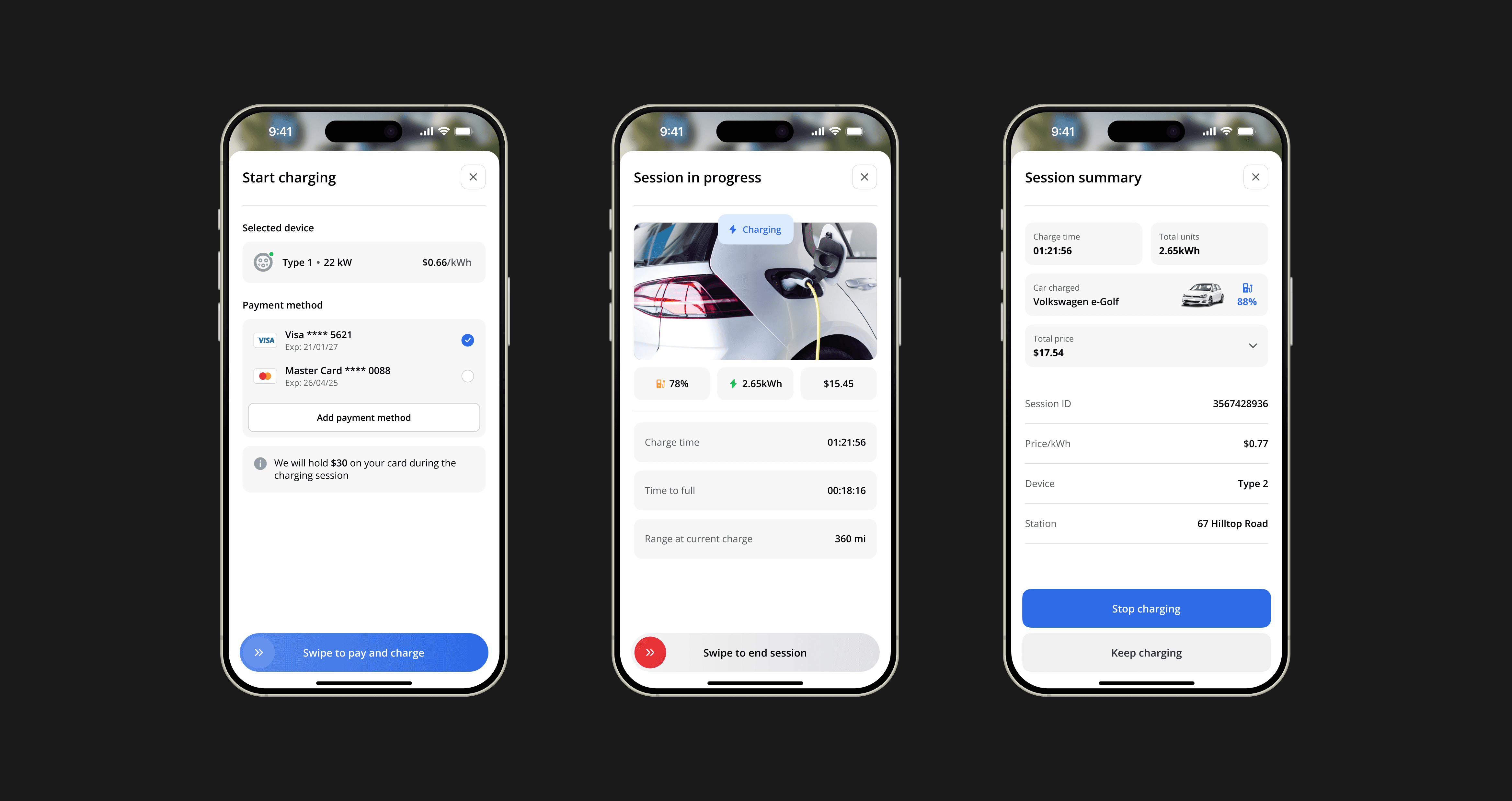
Design focus: reduce cognitive load with clean navigation and recognisable filters, show essential facts upfront (compatibility, power, pricing), and confirm actions unambiguously so every session starts smoothly.
Competitor analysis
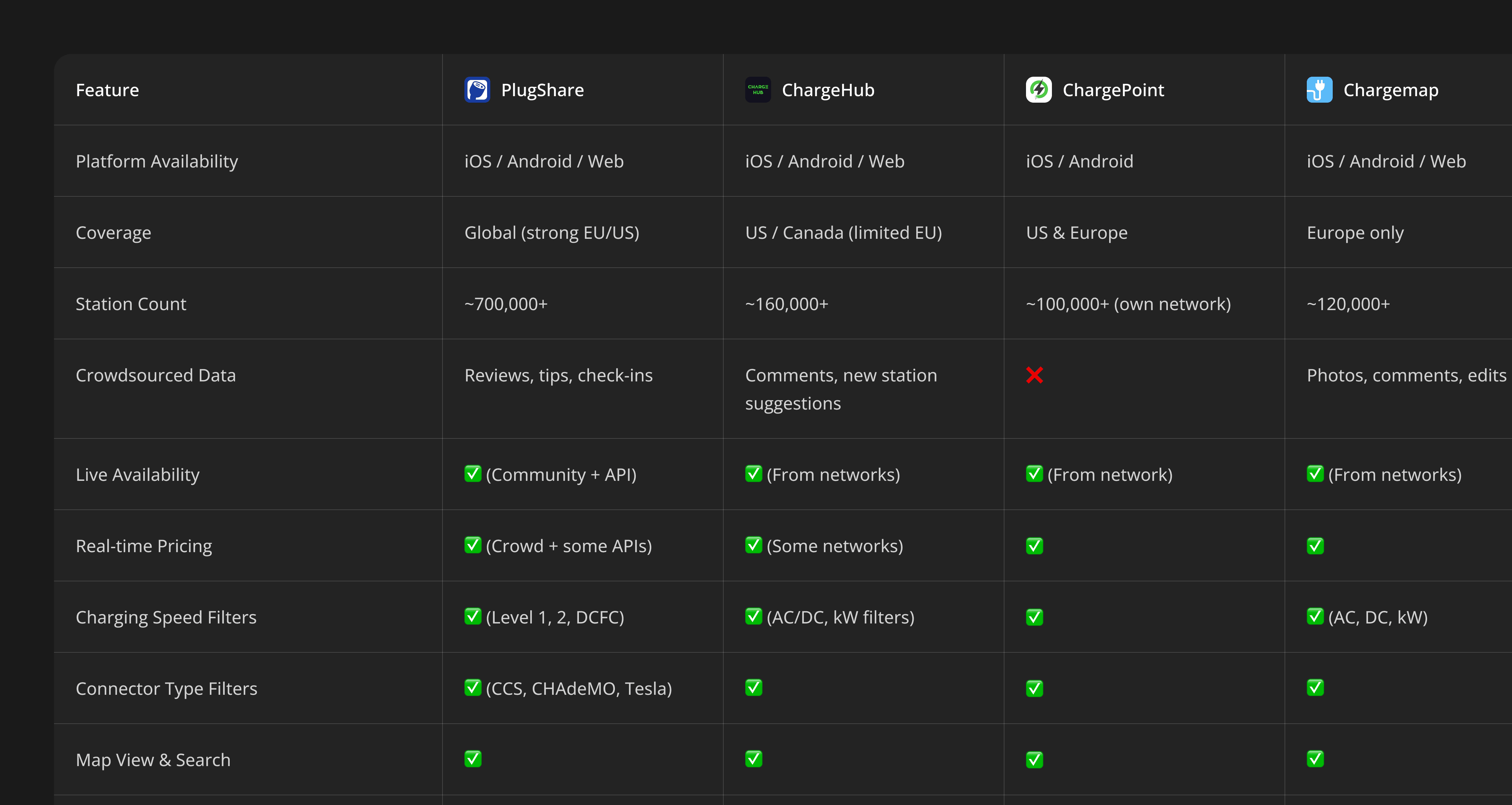
As a first step, I benchmarked leading EV charging apps and ecosystems to identify gaps in discovery, transparency, and start‑to‑charge speed across PlugShare, ChargePoint, EVgo, Tesla, Shell Recharge, and regional leaders.
Key findings:
Community data and reviews drive trust at point of decision (PlugShare).
Proprietary vertical integration remains gold standard for stall‑level availability and seamless billing (Tesla).
Reservations/queues and notifications reduce uncertainty at busy hubs (EVgo, ChargePoint).
UX research
By studying features, user reviews, and adoption trends, I identified patterns in how drivers interact with existing solutions:
Search must be map-first with quick geo-permission, mirroring best-in-class station finder patterns.
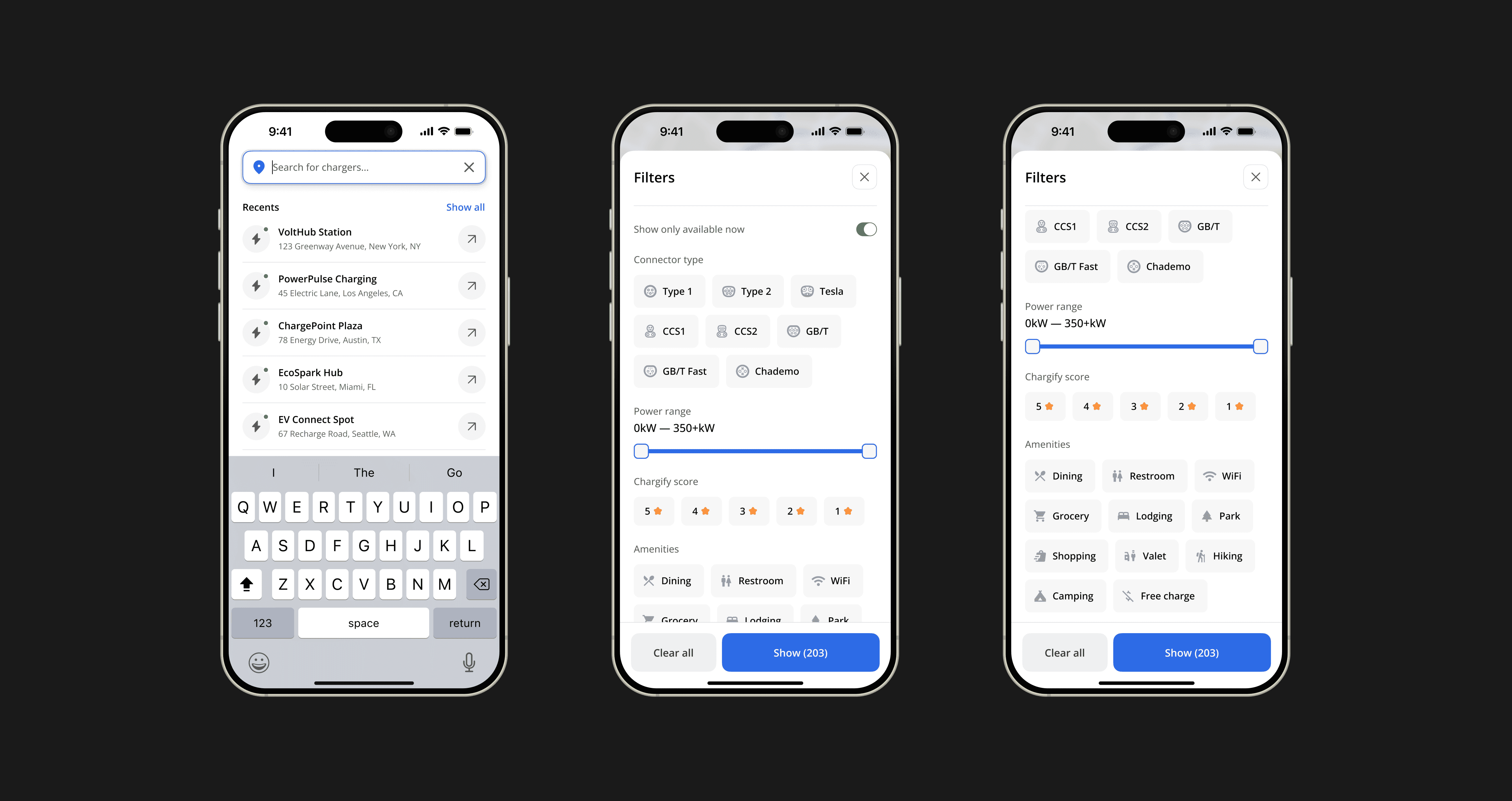
Filters should center on real decision drivers: connector compatibility, power tiers, pricing model, and reviews.
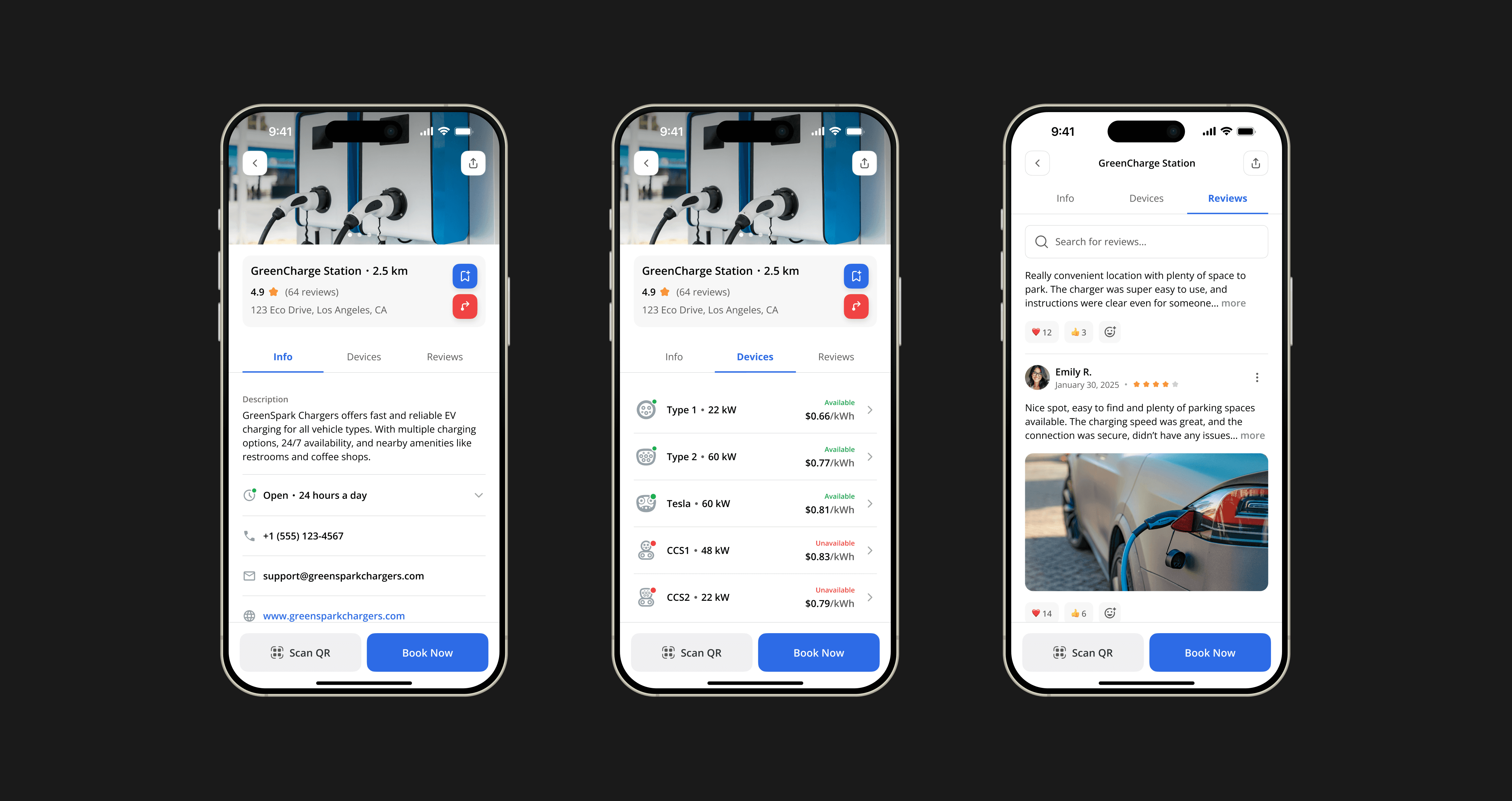
Detail pages that surface compatibility, power, price model, and community signals increase selection confidence and reduce app switching.
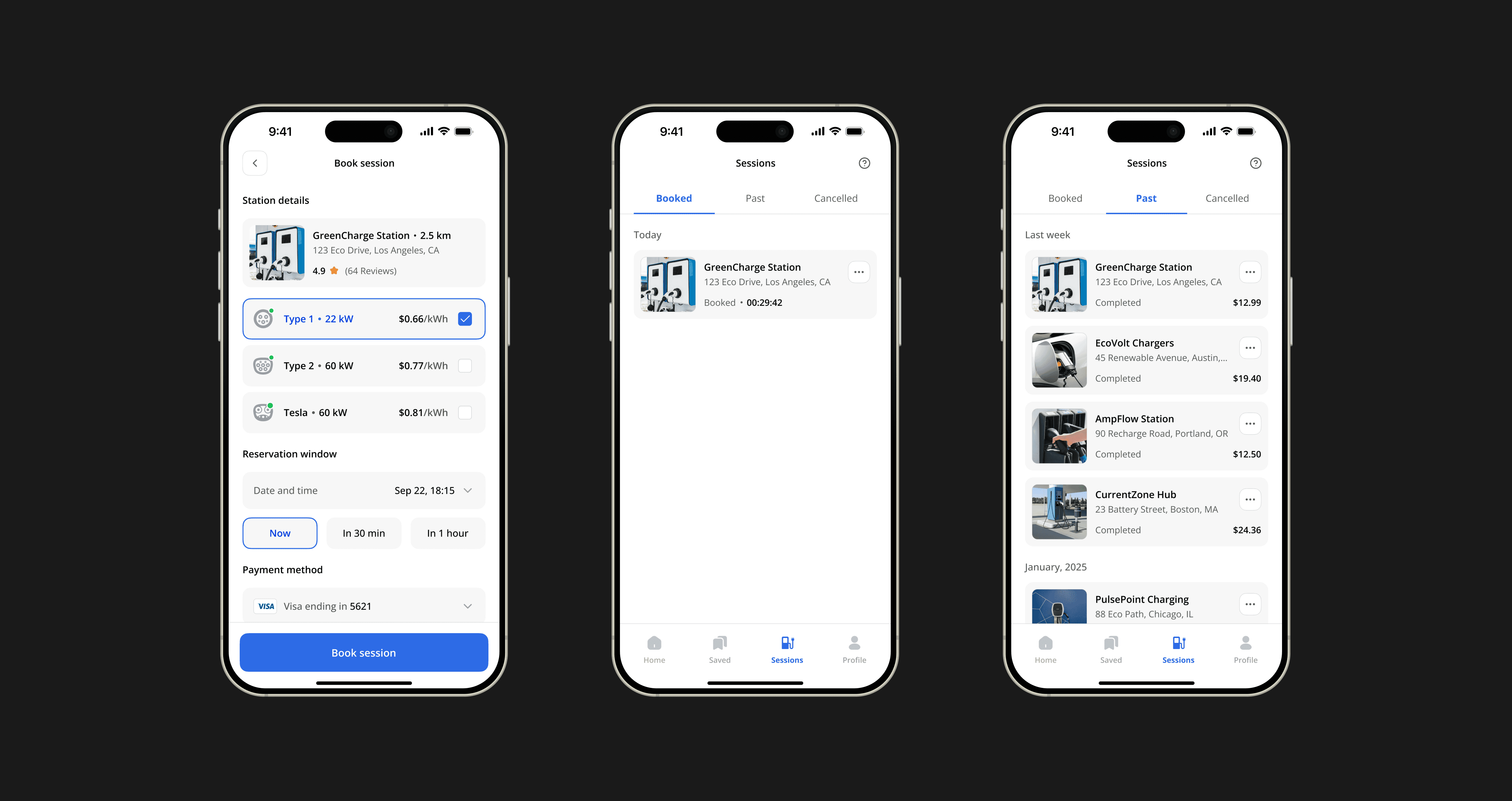
Providing booking options adds strong value, while well-defined rules and confirmations improve ease of use and perceived dependability.
UX hypotheses
During UX research, I outlined several key hypotheses:
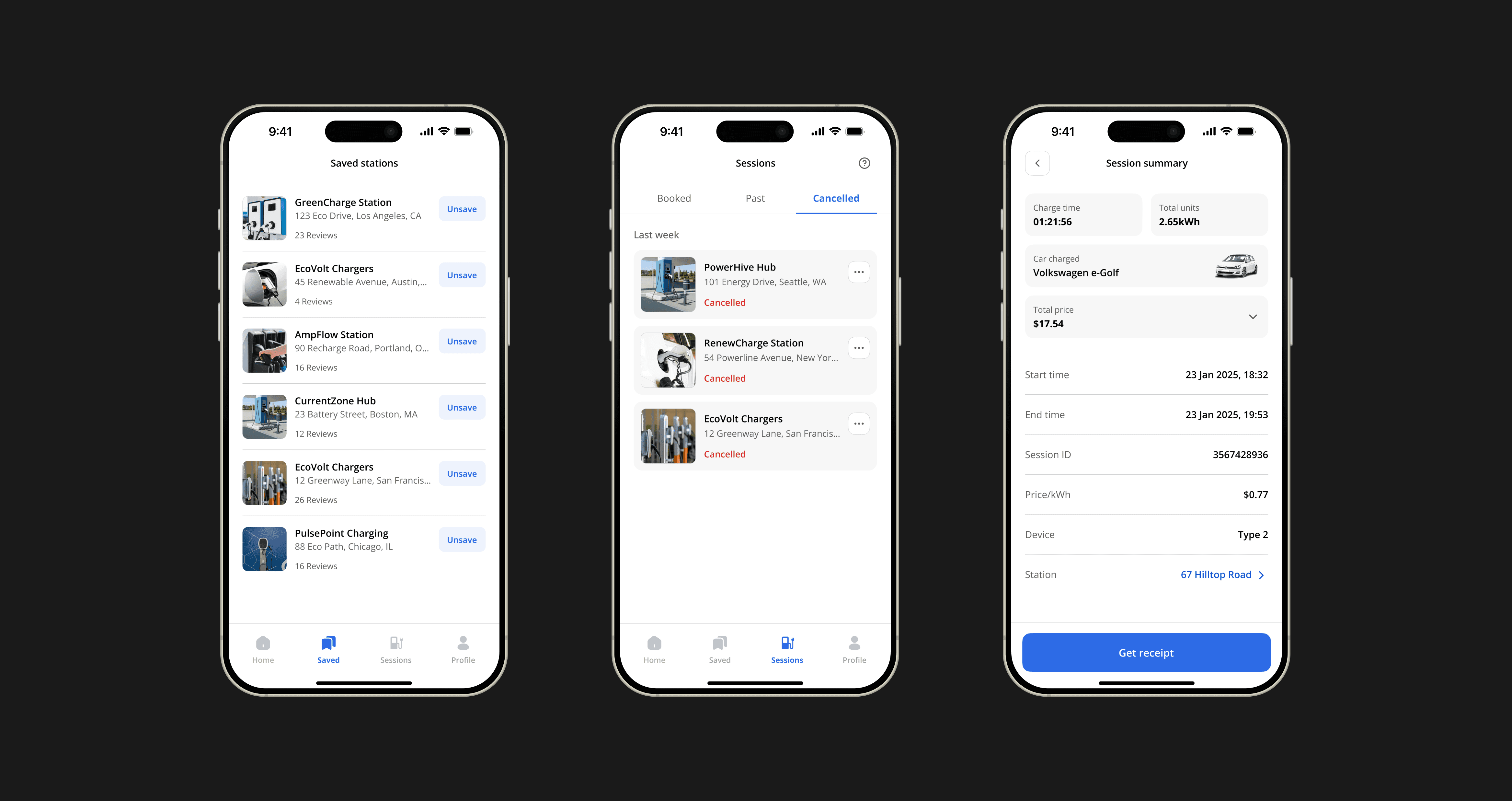
A Saved stations section pinned on bottom menu with quick access chips (primary, work, gym) will increase direct-start sessions from saved stations.
A single Sessions hub with tabs (booked, past, canceled) will increase findability of receipts and cut support queries.
Creating a vehicle profile (brand/model/connector/battery/plug type) during onboarding will auto-fill station compatibility and reduce repeated data entry.
User surveys
To base my design decisions on real charging behavior, I ran a user survey to learn what drivers want to see at each layer of the product (search, filters, station detail, booking, payments). This gave me a ranked set of priorities and clear content requirements for key screens.
Here are some of the insights:
Real‑time station info
82%
Pricing transparency
75%
One‑tap payment
63%
Reviews and photos
58%
Reservations
41%
Common frustrations:
Unclear pricing
49%
Fragmented payments
38%
Confusing station details
33%
Most‑used filters:
Connector type
74%
Power tier
62%
Station availability
68%
Amenities
31%
User flow
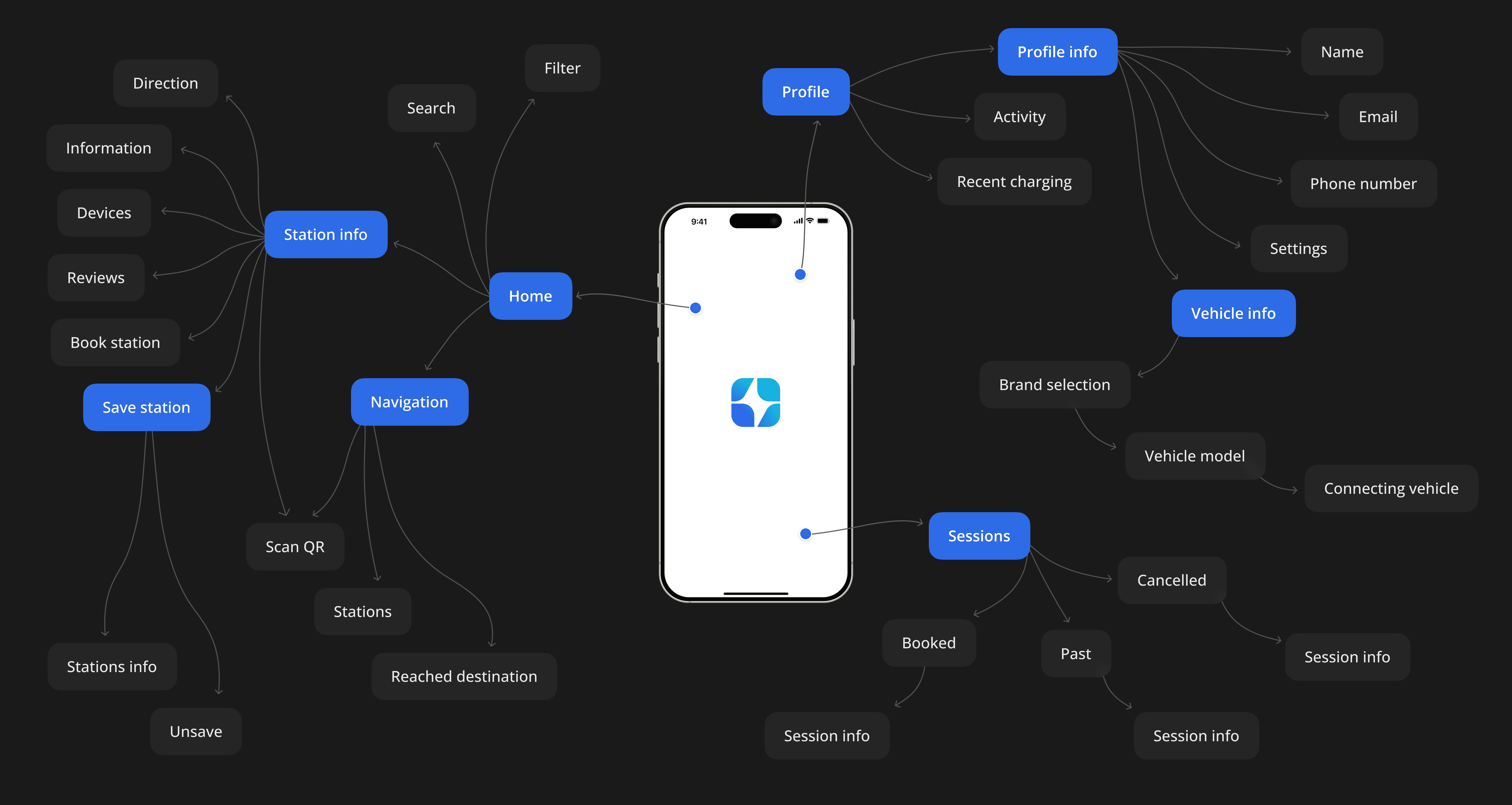
To show the EV driver journey in Chargify, I created the user flow, mapping each step from discovering stations to completing a charging session for a smooth and efficient experience.
Key steps in the flow:
Branding & Identity
I crafted Chargify’s identity to convey a sense of instant dependability and quiet innovation. The brief I set for myself was clear: high legibility, simple forms that scale, and a mark that signals energy, flow, and connection without visual noise.
Design system
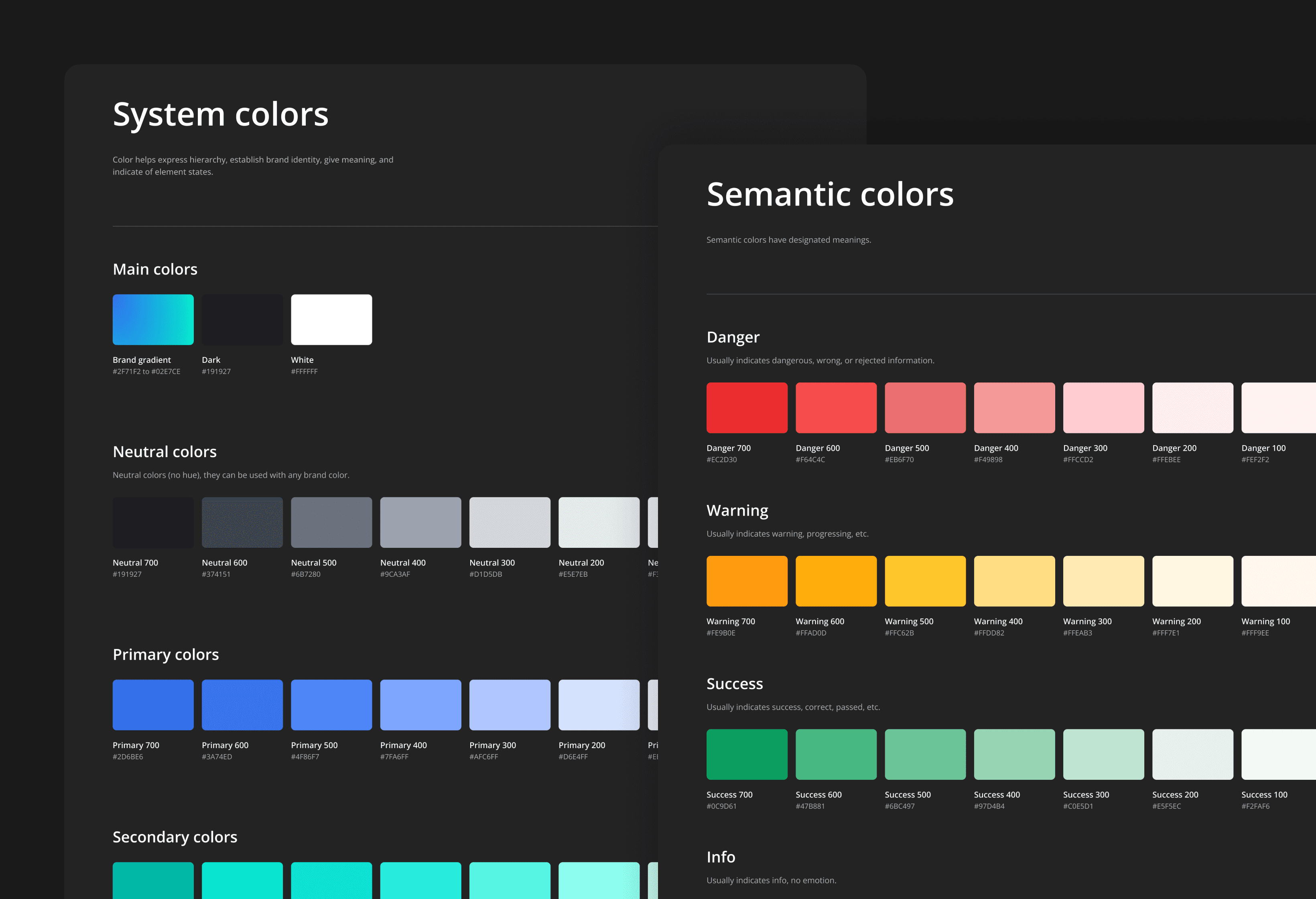
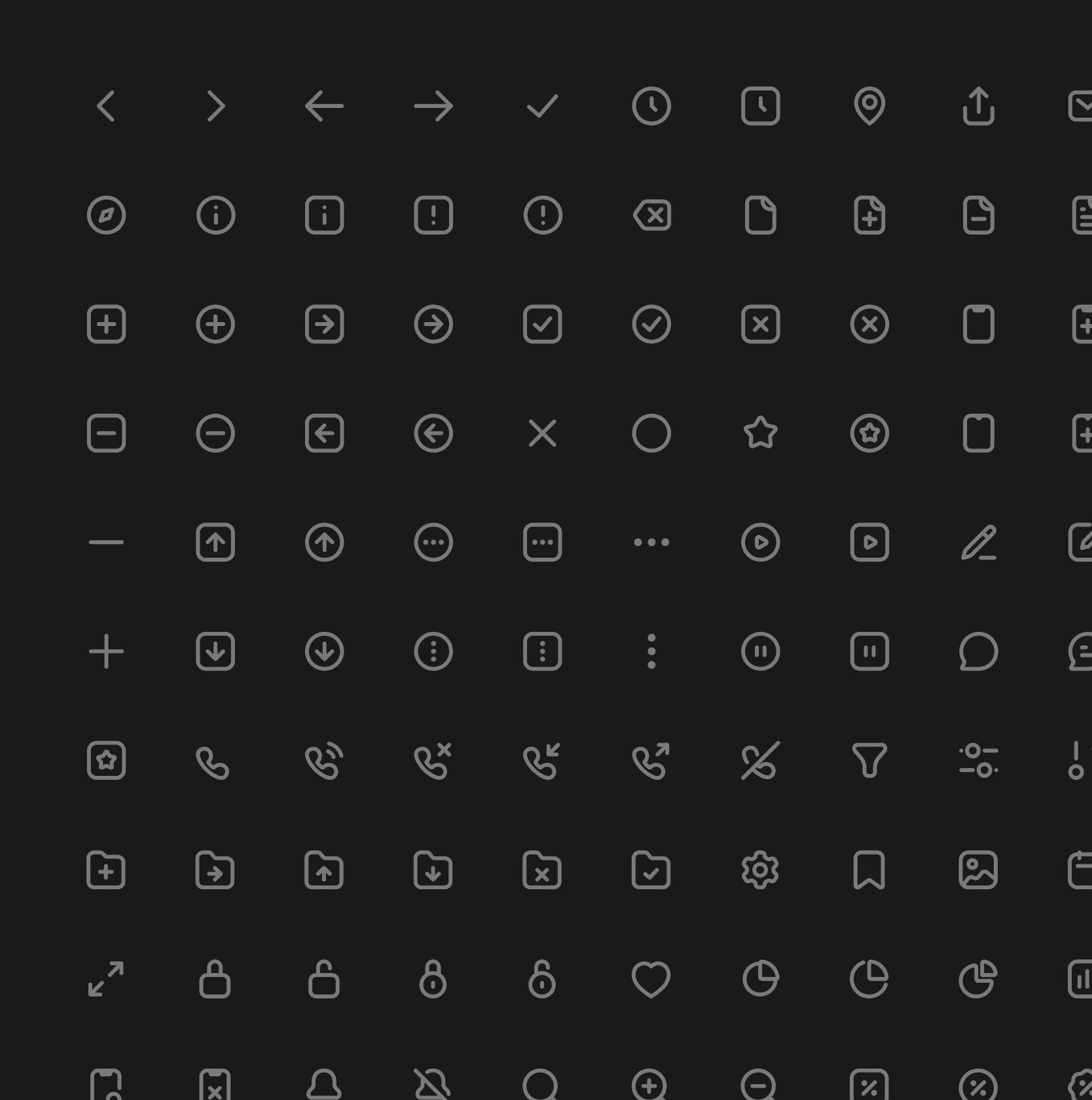
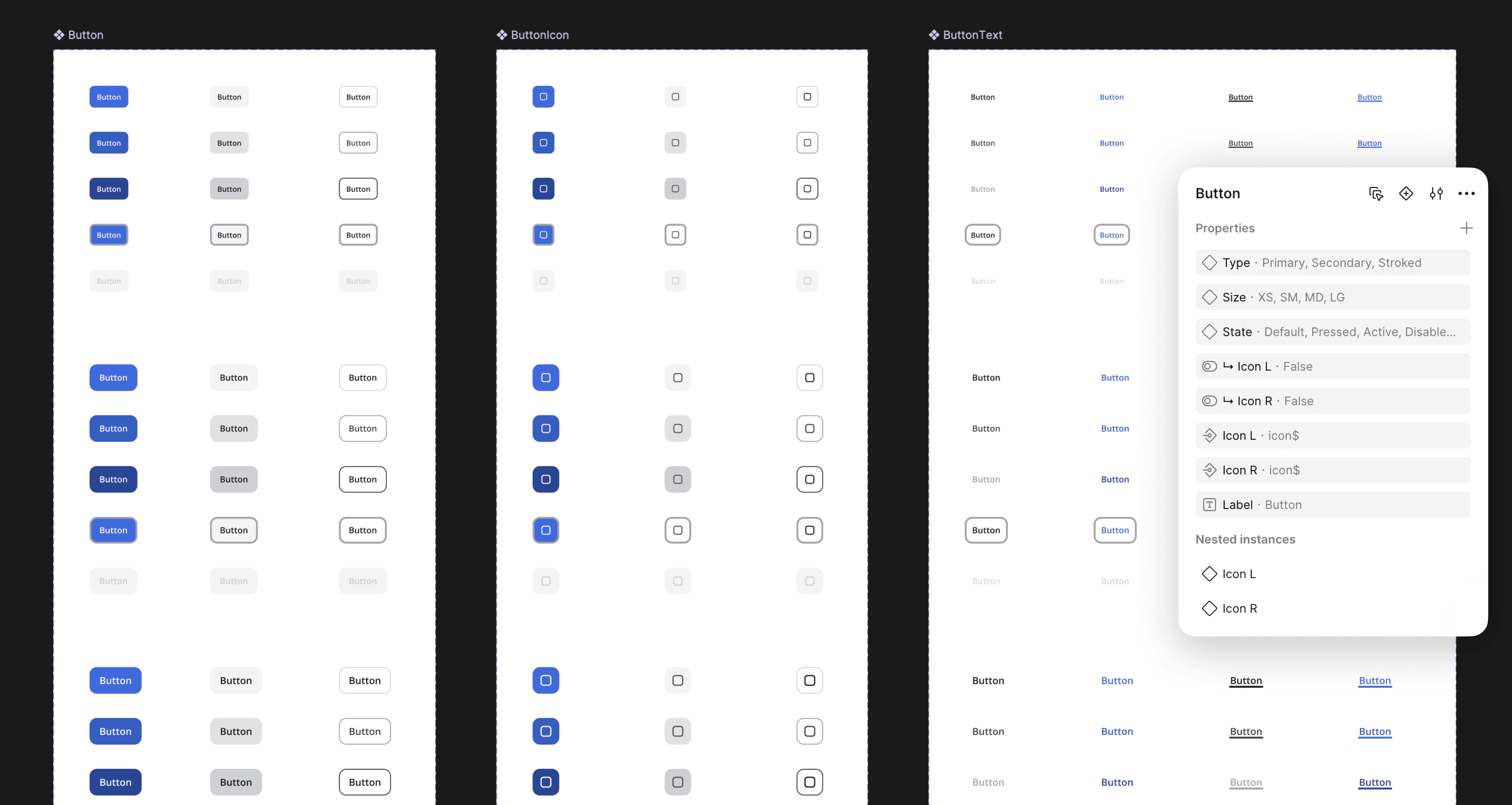
As part of my design process, I built the Chargify design system to keep the product consistent end to end, accelerate interface assembly, and streamline collaboration with engineering. It includes core tokens (color, typography, spacing, radii, states) and a library of general and domain components (buttons, inputs, station cards, sheets, forms etc) with defined anatomy, variants, and accessibility. The outcome is faster feature delivery, fewer visual inconsistencies, and effortless scaling across platforms and themes (light/dark).
UI design
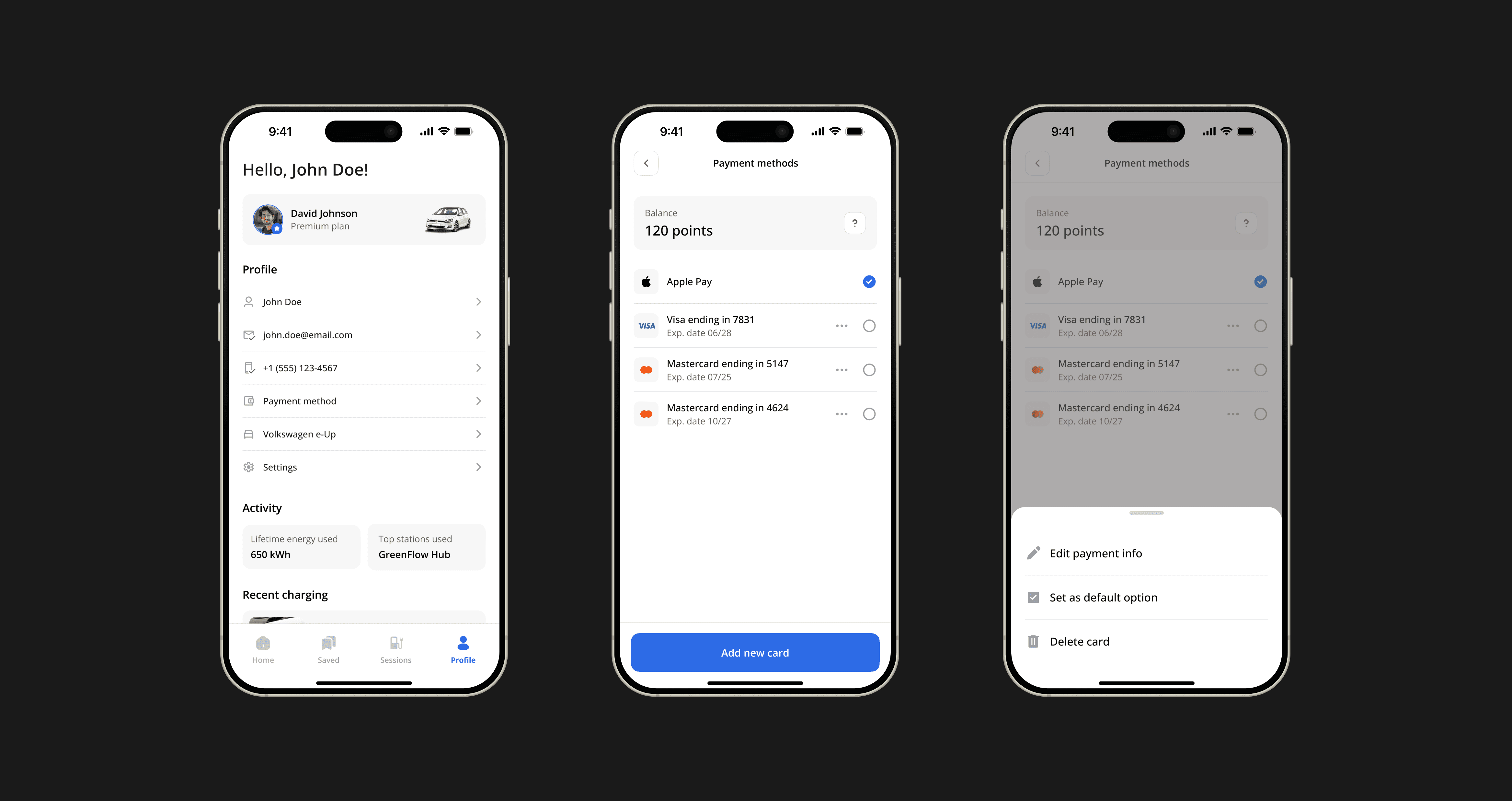
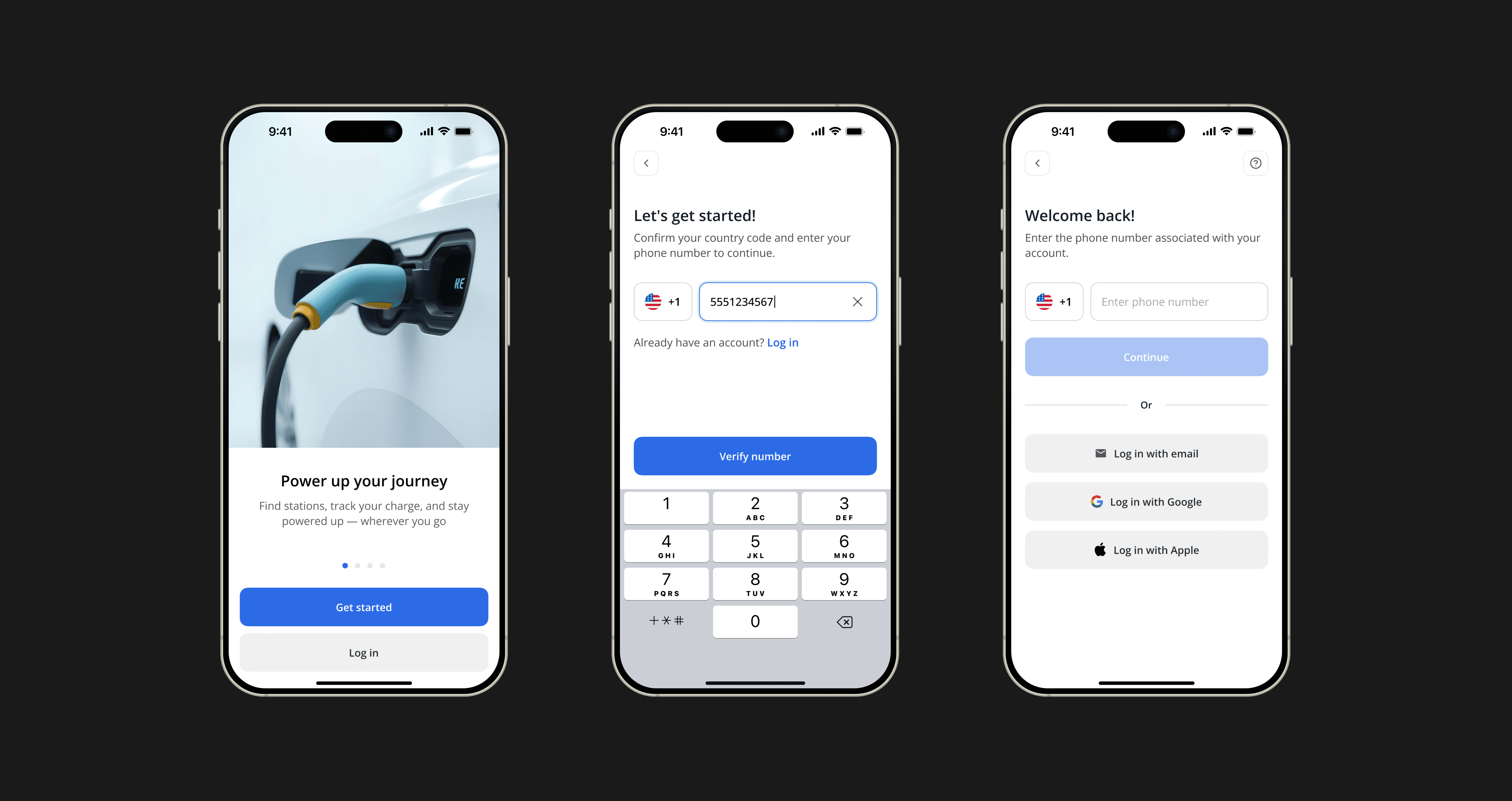
Registration, login & car setup
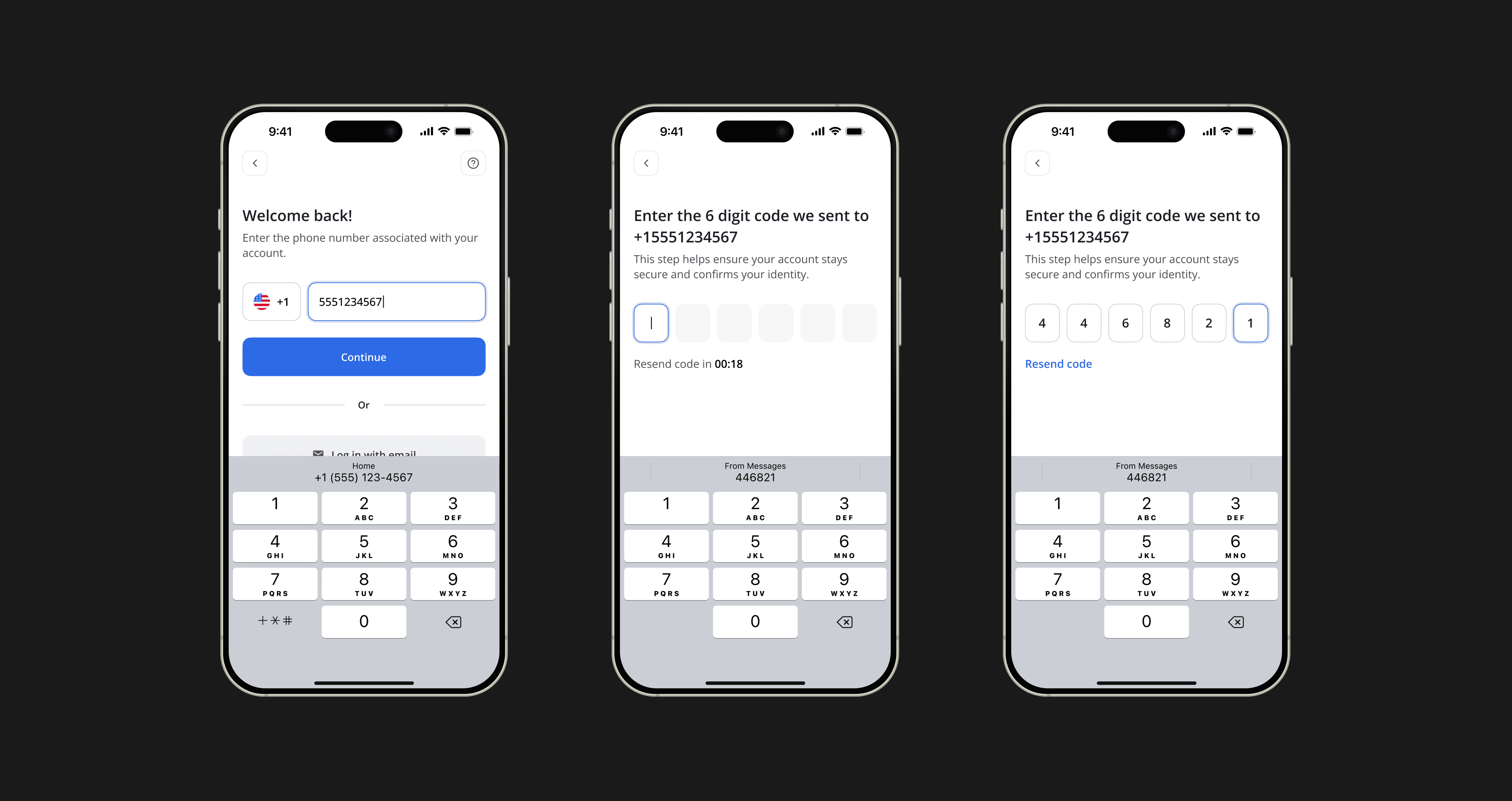
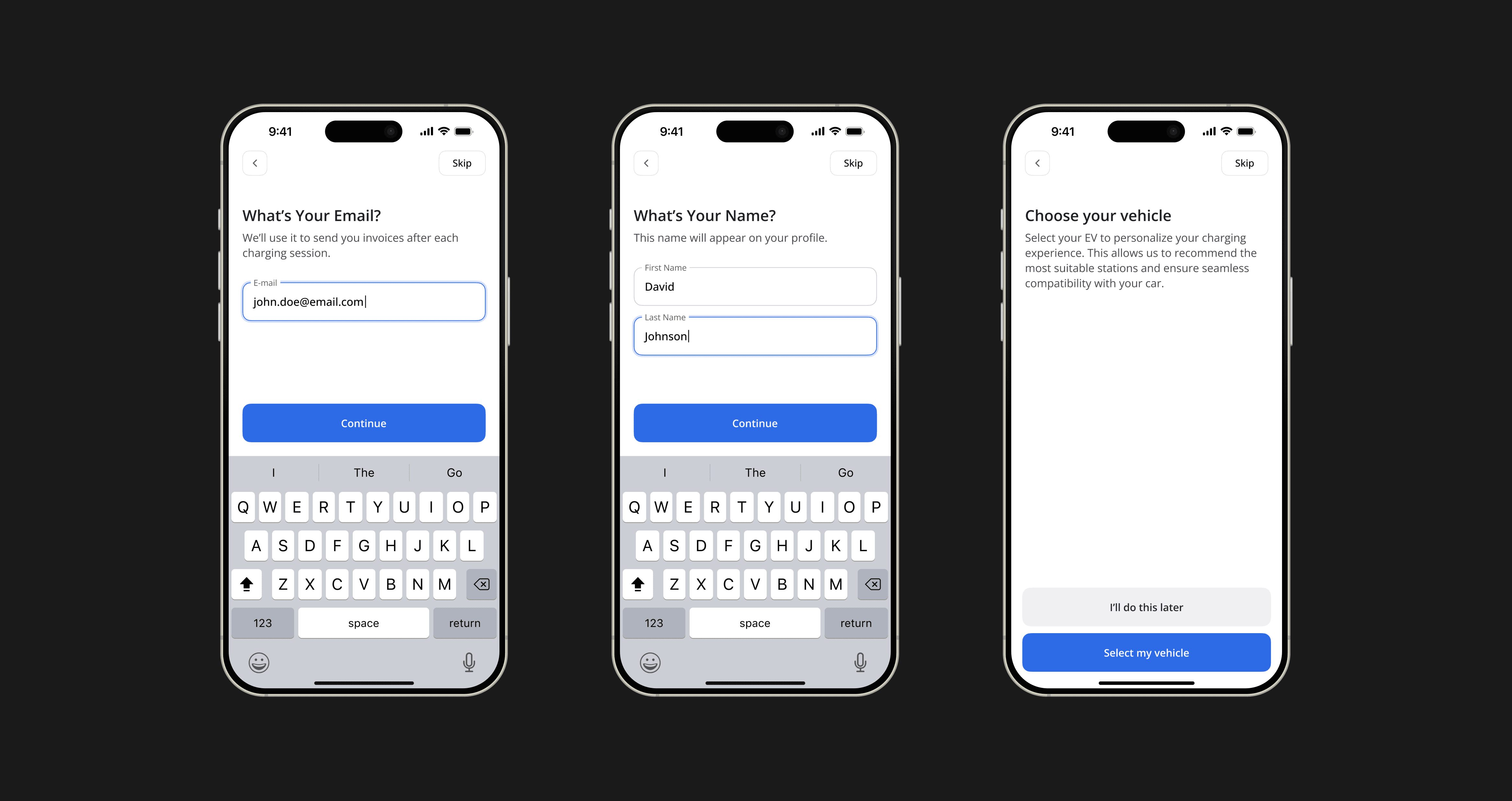
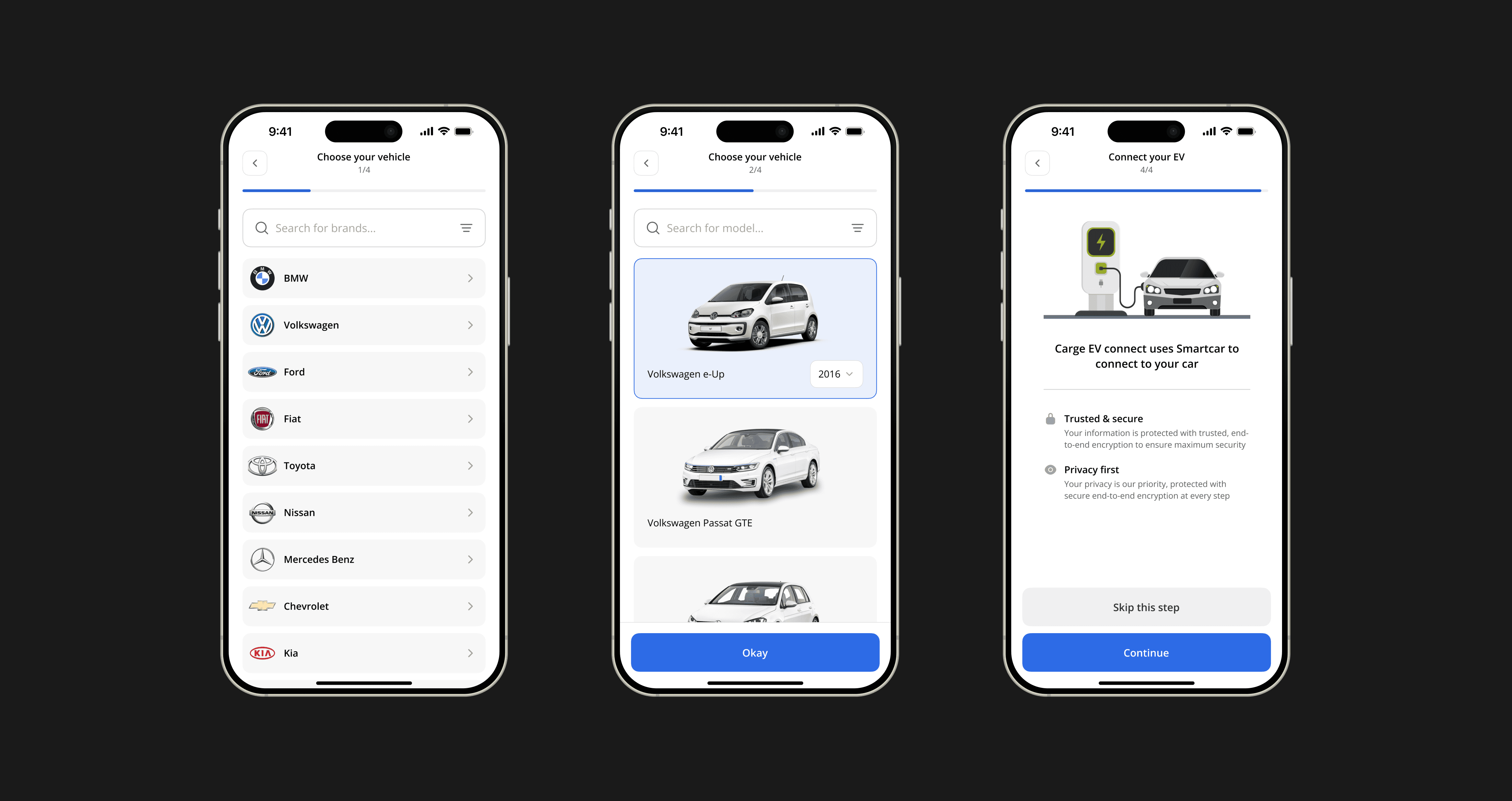
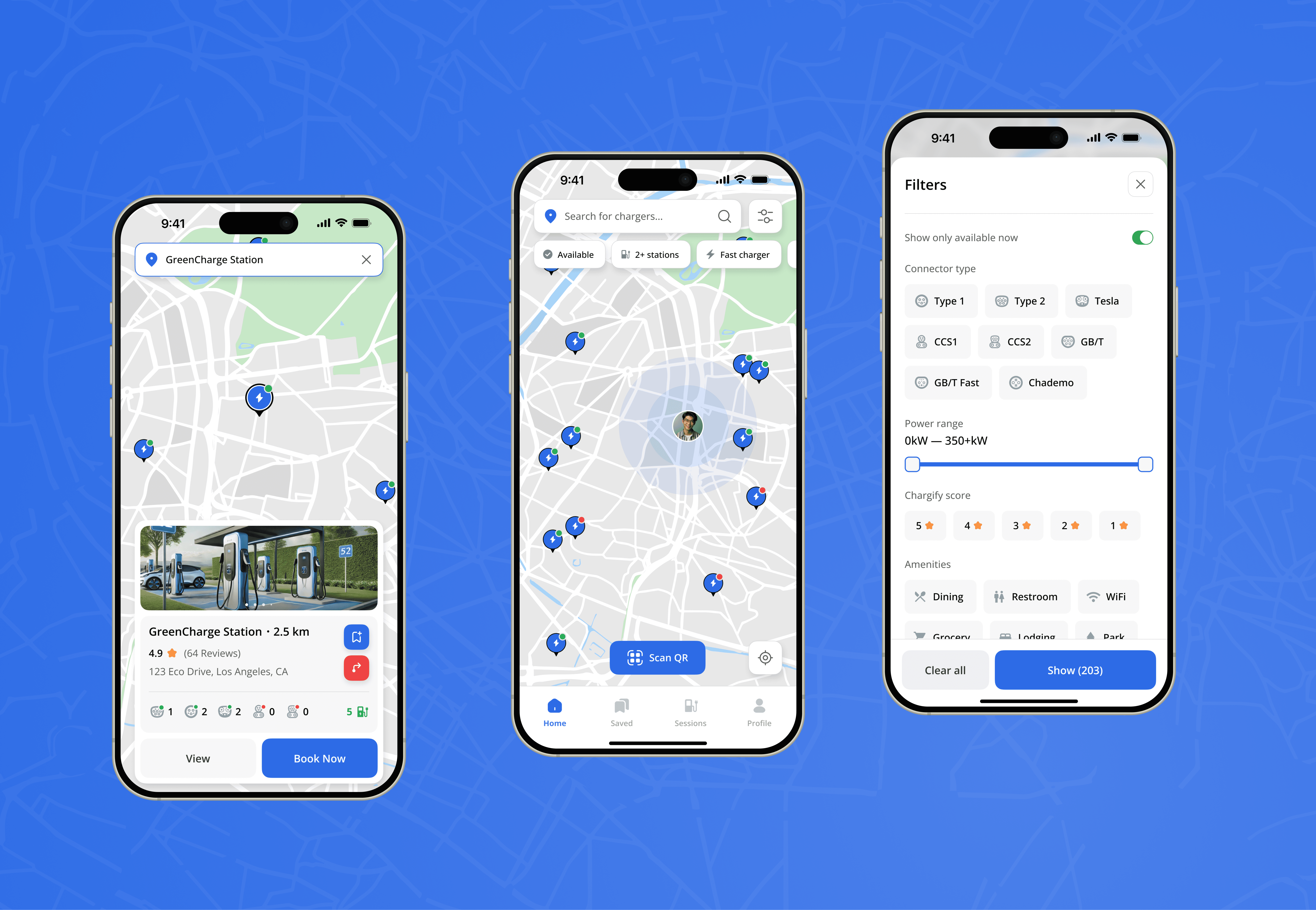
Home, searching & filters
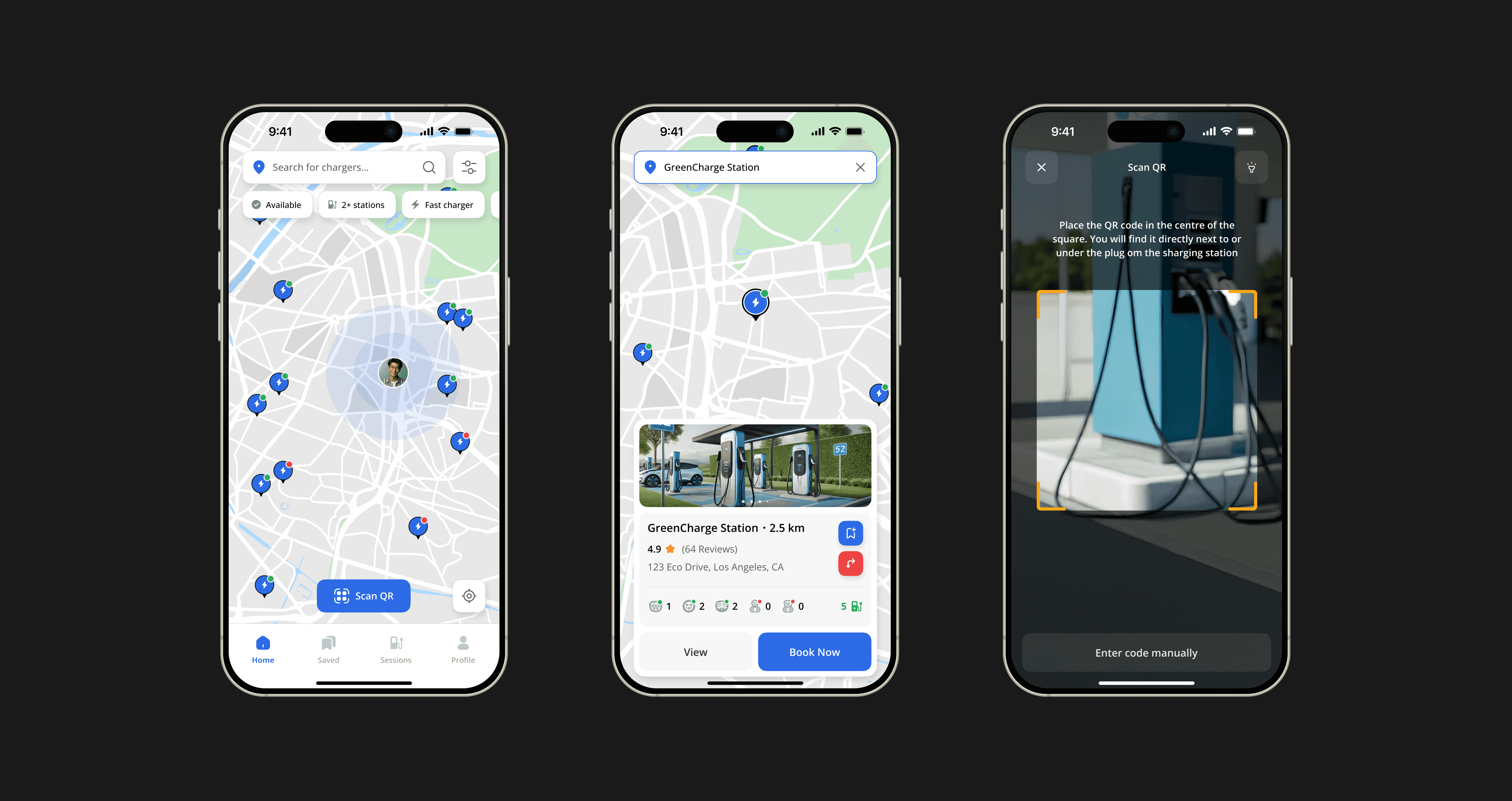
Station details - info, devices & reviews